Columns and Blogs

Supporting Local Communities with Hydrogen: A Visit to Asahi Park

Carbon Neutrality

We visited Asahi Park in Chita City, Aichi Prefecture, to learn about an initiative that uses hydrogen energy to support the daily lives of local residents and strengthen disaster preparedness.

In Aichi Prefecture, the “Low-Carbon Hydrogen Model Town Demonstration Project” is being promoted in collaboration with 17 companies and organizations. As part of this project, a stationary hydrogen fuel cell manufactured by Brother Industries, Ltd. (a 7 kW demonstration unit) has been installed beside the gymnasium at Asahi Park. This fuel cell incorporates Toyota Industries Corporation’s 8 kW FC Module.

The Asahi Park Gymnasium is a facility regularly used by local residents and also serves as a disaster relief supply distribution center during emergencies. Under normal conditions, the newly introduced fuel cell power generation system supplies electricity for lighting and other facility needs. In the event of a disaster, it serves as a backup power source to maintain essential functions. The system can operate flexibly according to power demand and operating requirements. One of its key features is the ability to provide both convenience in everyday use and reliable preparedness for emergencies.

Meiji Denki Kogyo Co., Ltd. was responsible for introducing the hydrogen supply system for this facility. The system features a compact configuration using two hydrogen cylinder bundles and is equipped with an automatic notification function that alerts the hydrogen supplier when hydrogen levels become low. Various operational measures have also been incorporated, creating a system that can be operated safely and reliably.
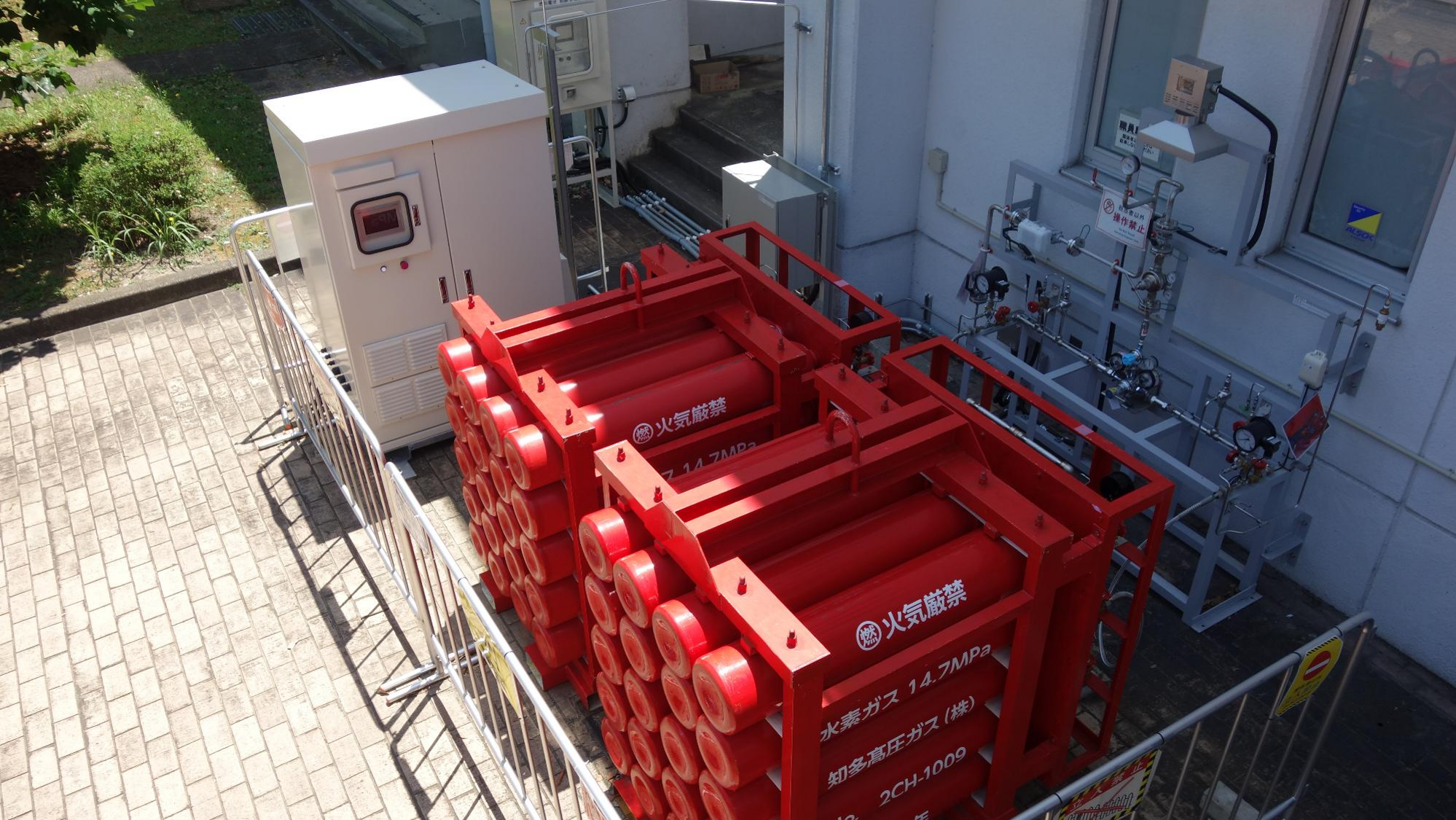
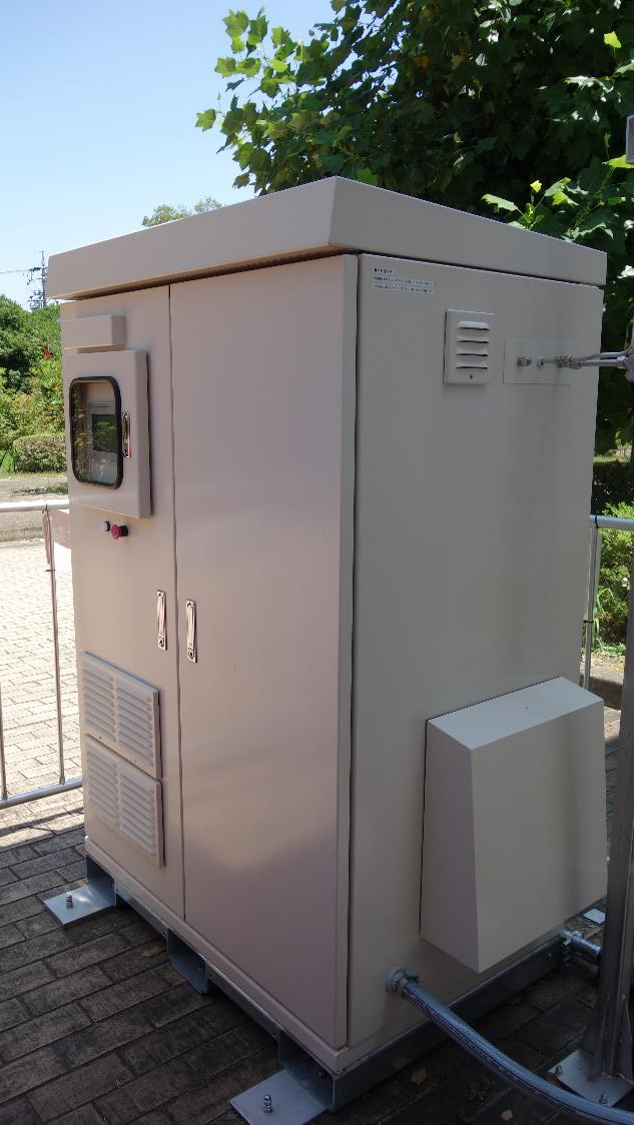
Figure1_Asahi_park_FC

Space-Saving, High-Efficiency Operation Enabled by a Compact FC Module

The stationary fuel cell generator manufactured by Brother Industries, which incorporates Toyota Industries Corporation’s FC Module, is designed for easy installation and operation.

Large-scale fuel cell generators and systems that combine multiple units may require external cooling equipment such as chillers. In contrast, the Brother Industries fuel cell generator does not require external cooling equipment. This enables a more compact installation footprint and simplifies deployment at existing facilities.

In addition, Toyota Industries Corporation’s FC Module can precisely adjust its output in 0.1 kW increments. Combined with the battery installed in the generator, it can efficiently supply the amount of electricity required under varying operating conditions. This contributes to a stable and reliable power supply for facility users.

Nevertheless, further efforts are still needed to promote the broader adoption of hydrogen energy, including extending equipment service life. This demonstration project is scheduled to continue through 2029. With future operation beyond that period also in mind, verification activities are planned to improve the durability of the FC Module and extend its operational lifespan.

Figure2_Brother_FC

Conclusion: Making Hydrogen a Source of Strength for Local Communities

Through this visit, we saw firsthand that hydrogen energy is beginning to be used as an accessible source of energy that supports both local residents’ daily lives and disaster preparedness.
Fuel cell power generation systems, which can serve both everyday electricity needs and as emergency power sources during disasters, hold great potential for future community disaster preparedness and decarbonization. This facility has also attracted interest from many local governments and companies. Going forward, hydrogen is expected to expand to public facilities in various regions as an energy source that supports a decarbonized society.
Toyota Industries Corporation will continue to share initiatives toward realizing a sustainable society and the latest technological trends, along with the potential of fuel cell technology and examples of hydrogen energy applications.